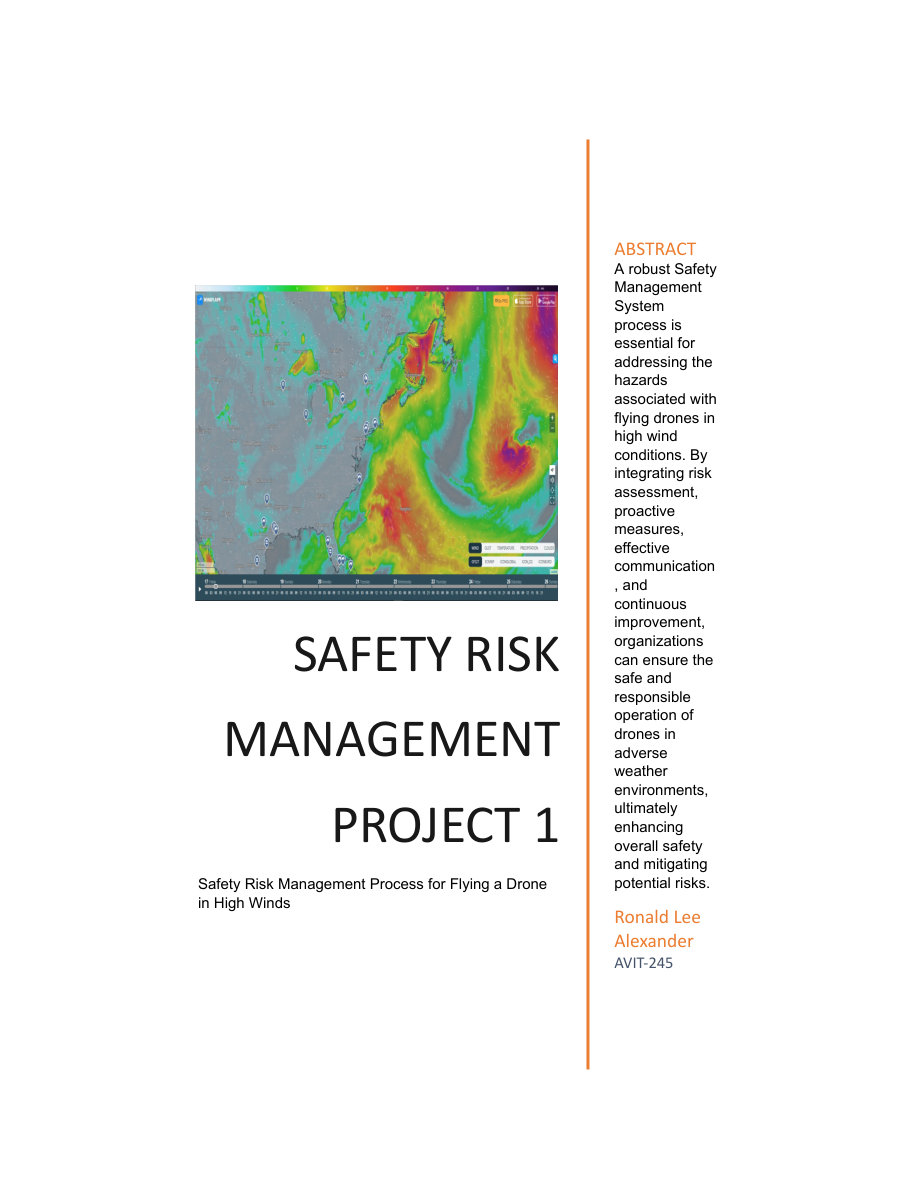
ABSTRACT
A robust Safety Management System process is essential for addressing the hazards associated with flying drones in high wind conditions. By integrating risk assessment, proactive measures, effective communication , and continuous improvement, organizations can ensure the SAFETY RISK safe and responsible operation of drones in adverse MANAGEMENT weather environments, ultimately enhancing PROJECT 1 overall safety and mitigating Safety Risk Management Process for Flying a Drone potential risks.
in High Winds Ronald Lee Alexander
AVIT-245
Developing a Safety Management System Process for Mitigating Hazards of Flying Drones in High Wind Conditions When flying a drone in strong winds, it can experience unpredictable movements, reduced battery life, and potential impact on video and image quality. To manage the risks, it is recommended to fly drones with wind resistance levels that correspond to the Beaufort scale and to consider factors such as drone weight and motor power. Additionally, following safety guidelines, understanding the drone's capabilities,
and avoiding flying in wind speeds exceeding two-thirds of the drone's maximum speed can help ensure safe drone operation in windy conditions. The proliferation of drones in various sectors has revolutionized numerous industries, from aerial photography to infrastructure inspection. However, operating drones in high wind conditions poses significant safety challenges. This abstract outlines the development of a Safety Management System (SMS) process aimed at mitigating hazards associated with flying drones in high wind environments.
The first step involves comprehensive risk assessment to identify potential hazards, including wind speed thresholds, gusts, and environmental factors that could affect drone operations. Utilizing data from meteorological sources and historical weather patterns, specific risk factors are quantified and categorized. Next, proactive measures are integrated into the SMS process to minimize risks. This includes pre-flight checks to assess wind conditions, establishment of wind speed limitations for safe operation, and
development of contingency plans for unexpected changes in wind patterns. Additionally, training programs are implemented to enhance pilot skills in handling drones under adverse weather conditions. Effective communication protocols are crucial for ensuring safety in high wind situations. The SMS process includes clear guidelines for communication between drone operators, ground personnel, and relevant stakeholders. Real-time weather monitoring systems are incorporated to provide timely updates
and alerts, enabling informed decision-making during flight operations. Continuous evaluation and improvement form the cornerstone of the SMS process. Incident reporting mechanisms are established to capture and analyze data on near-misses or accidents related to high wind conditions. Lessons learned are used to refine procedures, update risk assessments, and enhance training programs to adapt to evolving challenges. In conclusion, the development of a robust Safety Management System process is essential for
addressing the hazards associated with flying drones in high wind conditions. By integrating risk assessment, proactive measures, effective communication, and continuous improvement, organizations can ensure the safe and responsible operation of drones in adverse weather environments, ultimately enhancing overall safety and mitigating potential risks.
Safety Risk Management Process for Flying a Drone in High Winds:
1. Hazard Identification:
- High winds can pose a risk to the stability and control of a drone, potentially leading to loss of control, collisions, or crashes. - Other hazards related to flying a drone in high winds include reduced battery life, reduced flight time, and difficulty in maintaining position.
2. Risk Assessment:
- Evaluate the level of risk posed by high winds by considering the strength and direction of the wind, the drone's weight and size, and the skill level of the operator. - Assess the potential impact of high winds on the safety of the drone, surrounding structures, and people.
3. Risk Mitigation Techniques:
- Monitor wind conditions before and during the drone flight using an anemometer or wind speed indicator. - Avoid flying the drone in high winds exceeding the recommended maximum wind speed for the drone model. - Implement pre-flight checklists to ensure the drone is in good condition and can withstand high winds. - Fly the drone at lower altitudes and closer to the ground to minimize the impact of high winds. - Use a drone with a built-in stabilization system or add-on accessories such as propeller guards or wind
socks to improve stability in high winds.
4. Contingency Planning:
- Establish emergency procedures for safely landing the drone in case of sudden gusts of wind or loss of control. - Have a plan to secure the drone and prevent it from causing harm in case of a crash or sudden weather change.
5. Documentation and Review:
- Document all high wind-related risks identified, mitigation techniques implemented, and outcomes of risk assessments. - Review and update the safety risk management process regularly based on feedback, incidents, and new information related to flying drones in high winds.
Risk Control Measure 1: Wind Speed Monitoring - Wind speed monitoring involves using an anemometer or wind speed indicator to measure the strength of the wind before and during the drone flight. 1. Before the flight, the drone operator checks the wind speed using the anemometer to determine if it is within the safe operating range for the drone. 2. During the flight, the operator periodically checks the wind speed to ensure it remains within safe limits and makes real-time adjustments if needed to maintain control of the drone.
Risk Control Measure 2: Delay or Abort the flight 1. If the wind speed exceeds the recommended maximum for the drone model, the operator delays and or abort the flight until conditions improve. By implementing these risk control measures, drone operators can enhance safety when flying in high wind conditions.